Hardware is hard. It’s a mantra that startup founders know well, and one that has become even more true as “hardware” has grown to include increasingly complex components, advanced materials, and chemistry.
It’s not just hard, it can be lonely.
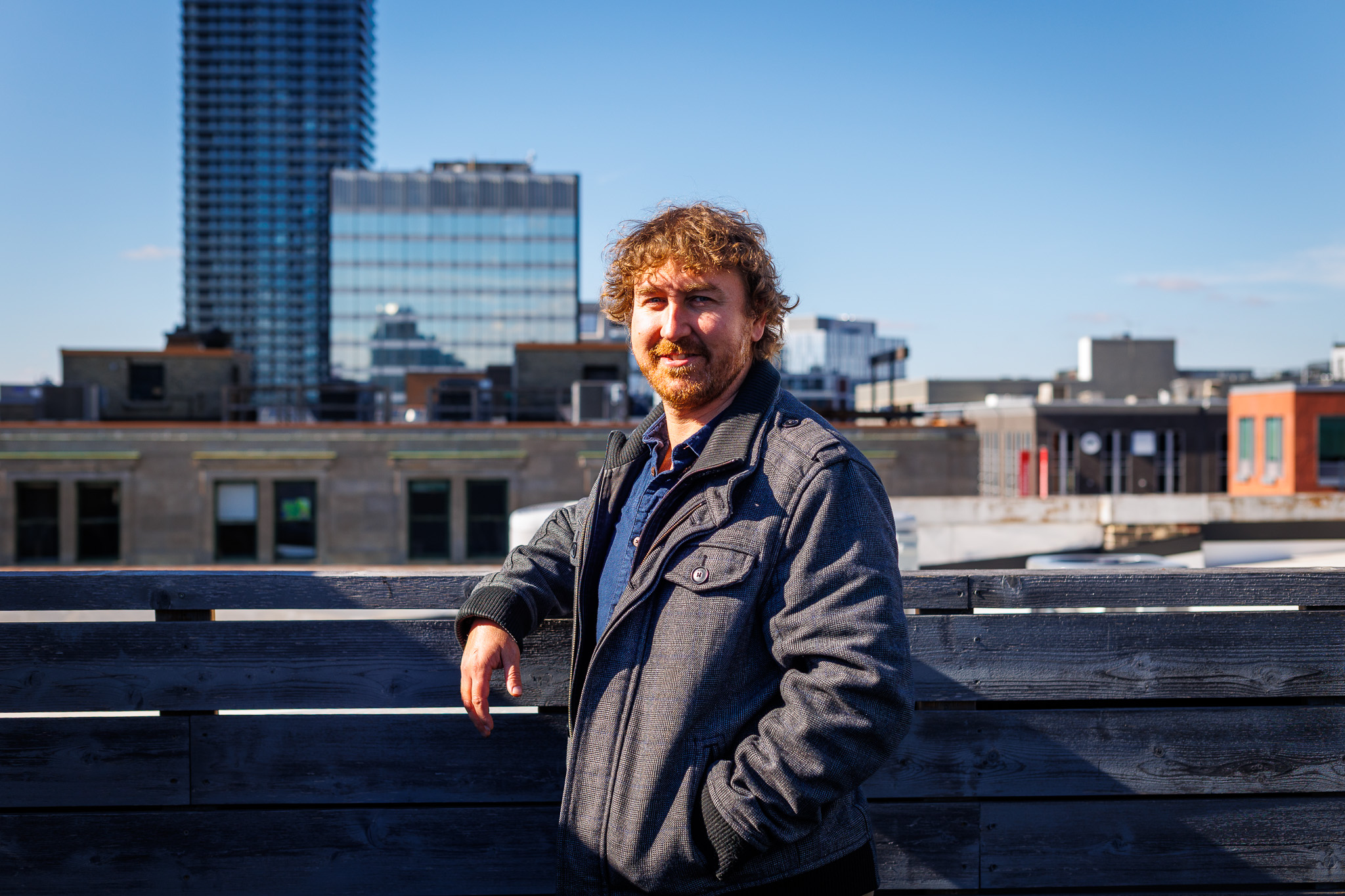
Finding other founders who are dealing with the same challenges can make all the difference, and that’s what inspired local founder Cole Van Vlack to launch Hard Tech Happy Hour, a community for founders and builders working to create the next generation of hardware startups.
Van Vlack launched Hard Tech Happy Hour to address a gap he found after moving to Waterloo Region from Kingston. After settling in, Van Vlack started attending some of the regular meetups like Startup Drinks KW and Dev House. What was lacking though was hardware founders.
“Where the heck are the hardware people? This was the home of BlackBerry. Everything I went to was AI, B2B SaaS, fintech, crypto, mobile, web. All cool technologies. But where are the people working on hardware and deep tech? The ones commercializing research? I couldn't find them,” he said. “The immediate reaction from the people around me was, ‘Well, if it's not here, I guess you have to build it.’”
Not one to sit around and wait, Van Vlack launched Hard Tech Happy Hour and invited fellow hard tech founders to meet up at Arabella Park Beer Bar. The meetups have evolved to include hikes on local trails and brunches, event types designed to meet the different schedules and lifestyle needs of the group’s members.
“How do we find other researchers, founders, investors, and students up to their eyeballs in building? How do we connect people who have a deep love of this kind of technology? There are so many cool things people are building here,” Van Vlack said.
Choosing the hard path
Van Vlack knows a thing or two about hard tech. After earning his PhD in physics (quantum optics) from Queen’s University, he partnered with a fellow graduate to commercialize research and launch a startup that focused on non-destructive testing for laser welding.
“You wouldn't know it, but lasers are used all over automotive and aerospace, because there's no faster way to join two materials. If you've got to put down a lot of welds, you use lasers,” he said.
The challenge is that lasers are almost too precise for their own good.
“You're welding at speed, trying to put the light at exactly the right spot along a seam between two parts. Small environmental effects, like dirt, soot and dirty cover slides, are a big challenge in the industry. Before our technology, the gold standard was: weld everything, cut one in half, look at it and if it’s good, the next thousand should be good,” Van Vlack said.
To solve this, their company took medical imaging technology and applied it to laser welding.
“When you weld with a laser, you briefly turn the metal from a solid to a liquid to a gas. In that instant, there's a transparent pocket. If you bounce an imaging beam into it, you can measure the depth and length of the weld for quality assurance and pass or fail,” he said.
The technology quickly proved itself and after five years, Van Vlack and his co-founders were able to successfully exit with a sale to a manufacturing laser supplier. But as many founders find out, success in startups isn’t easy to replicate.
“After trying another startup in Kingston, I immediately got my ass handed to me. I knew it was time for a change, and that’s when my wife and I looked at Toronto or Waterloo. Waterloo ended up being the right choice.”
Building on a love for hard tech (and hard problems)
By day, Van Vlack works for one of Waterloo Region’s hard tech leaders, Virtek Vision. The company recently celebrated its 40th anniversary, proving that while hardware is hard, you can be successful at it with the right technology and people. Virtek Vision builds project systems for aerospace manufacturing companies.
As Van Vlack explained, when a company is building airplane wings out of carbon fibre, knowing where to place each sheet is a delicate process that requires extreme precision. Virtek builds a projector that traces an outline. Place this sheet right here, now the next one right here. It builds the whole thing layer by layer, exactly to the design engineer's spec.
So how can a company as successful as Virtek Vision go relatively unnoticed in the community? Van Vlack said the challenge for many of these hardware companies is that their customers aren’t here.
“The founders, product, and salespeople have to put their energy outside the community to keep those businesses alive. But they're still doing really cool stuff, and when you get them in a room, you hear about the amazing things they're building,” Van Vlack said.
If you build it, they will come
With a young family and a full-time job, Van Vlack said growing Hard Tech Happy Hour comes down to being thoughtful and intentional about community building.
“The focus has been consistency, letting the community know this is a thing that's happening. And I try to be a good router of information. You're working on this, you should talk to this person. You're interested in these things, I know a few people who could lend you some hardware,” he said.
Van Vlack’s goal is to gather as many people from the community into the room as possible, let them know they’re not alone, and connect them with others who have been there and solved different challenges.
“The more smart people building interesting things and sharing their learnings with each other, the better. Let's give them a home to land here and keep building the ecosystem.”